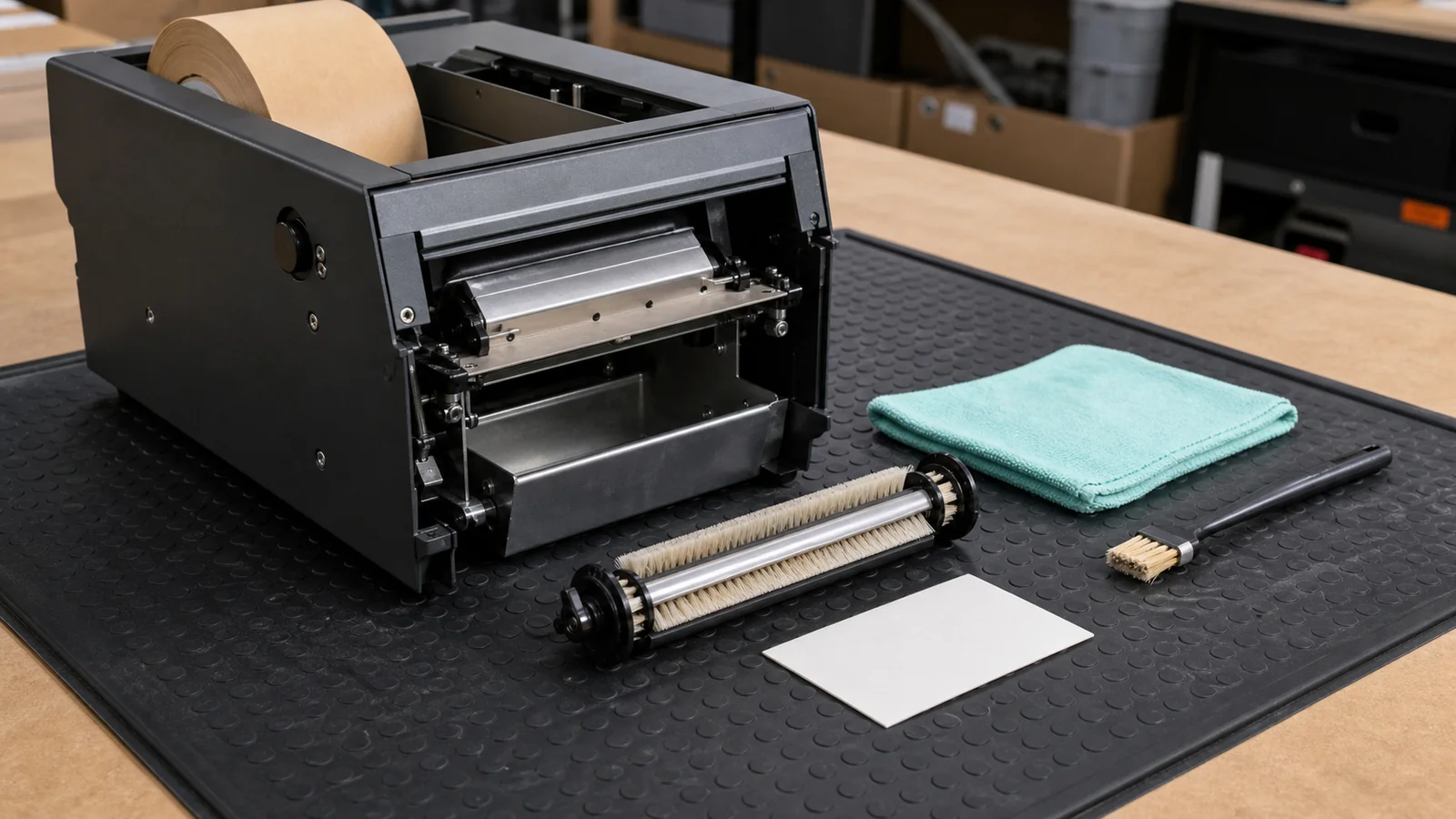
A dispenser that feeds, cuts or wets inconsistently can make a good tape look unreliable. Use the manufacturer’s manual for cleaning methods, safety steps, intervals and parts; this checklist identifies what the packing team should notice and record. It does not prescribe a universal service schedule or water setting.
What to Check and When
| Check point | What the operator should verify |
|---|---|
| Before packing starts | Roll loading, feed, cutting, water delivery and one test strip on a representative carton. |
| When output changes | Stop and record the roll, machine, carton, symptom and recent service action before changing settings. |
| At the manufacturer”s service interval | Complete only the cleaning, inspection and parts work specified for that dispenser model. |
At the Start of a Shift
- Confirm the selected 48 mm or 60 mm roll is compatible with the dispenser and is loaded in the orientation specified by its manual.
- Observe a test feed and cut. Note skewing, slipping, incomplete cutting or a strip that catches in the path.
- Check that the water-delivery area is in the condition required by the machine maker. Do not add cleaning chemicals or adjust settings outside its instructions.
- Apply a short strip to a representative carton and look for uneven activation or placement before production boxes are packed.
When a fault appears
| Symptom | What to record and check |
|---|---|
| Tape wanders or jams | Roll identity, width, loading, feed path and whether the problem follows one roll or station. |
| Irregular cut | Machine model, observed cut, approved service procedure and whether a trained technician is needed. |
| Uneven wetting | Water-delivery observation and machine condition under the manufacturer’s instructions. |
| Seal lifts on one board | Carton source, application record and whether the same tape seals another reference box. |
Stop using an unsafe or malfunctioning machine and follow your site’s equipment procedure; do not improvise a repair from a blog post. Escalate recurring failures to the equipment supplier with model, photos and fault history. For problems that may involve the carton or application rather than maintenance, use the seal troubleshooting guide.
Keep maintenance and tape specification together
For an explanation of the adhesive and wetting step, review how water-activated tape works.
Record the machine model, approved roll width and construction, last service action, fault and owner. BrandTapeCo sells custom tape in 48 mm and 60 mm widths only; a machine’s support for another width does not make that tape available. Standard online custom rolls are 50 m with a five-roll minimum per design and color configuration. A different length can only be assessed by sales and separately quoted in writing, with no guarantee it can be made. Check the current tape options against machine requirements before placing an order.
Frequently Asked Questions
How often should a gummed tape dispenser be cleaned?
Follow the interval and method in the dispenser manufacturer”s manual. Increase inspection after a jam, uneven wetting, contaminated water-delivery area, or another documented fault.
Why is water-activated tape feeding crooked?
Check roll loading, width compatibility, guide alignment and the approved feed path. Stop using the machine if the fault creates a safety risk or cannot be corrected under the manual.
Can cleaning chemicals be added to the water system?
Only if the machine manufacturer specifically approves them. Unapproved chemicals may damage components or contaminate the wetting system.
Should the tape be tested after maintenance?
Yes. Run a short strip and apply it to a representative carton before returning the station to normal production.