A restaurant can use one name across takeaway orders, bottled sauces, merchandise and gift boxes. Those orders do not share one packaging requirement.
Custom packing tape becomes relevant when the business ships an outer corrugated carton. It should not be treated as a substitute for the food container, the product seal or the protective packaging inside that carton.
Separate takeaway service from parcel shipping
Start by listing what leaves the kitchen or shop. A local hot-food handoff is different from a parcel containing sealed retail products. Do not carry a tape decision from one to the other without reviewing the packaging.
For BrandTapeCo’s water-activated kraft tape, direct food-contact suitability is not confirmed. Plan around the outer shipping carton and keep the product in its own appropriate packaging.
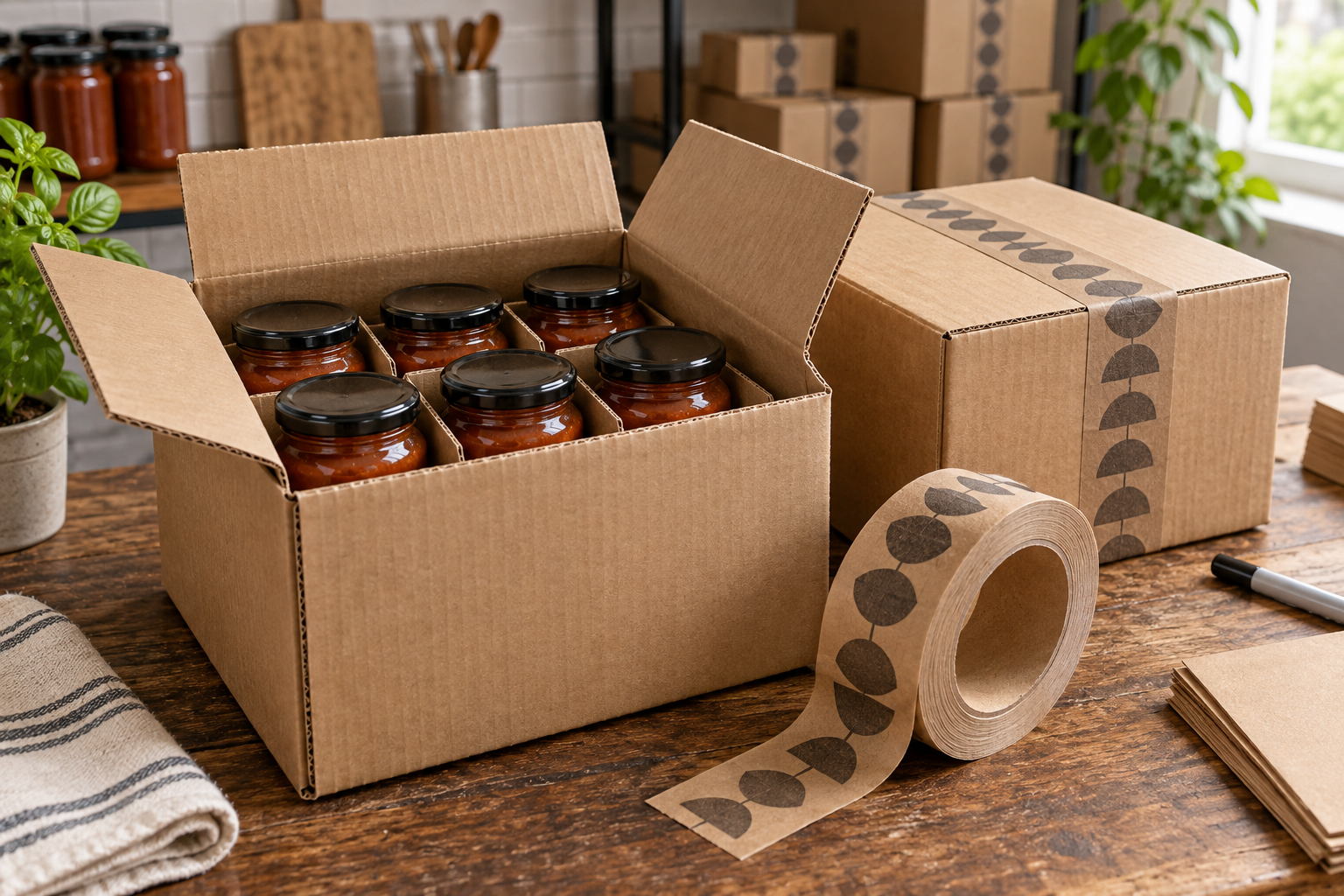
A carton containing glass sauce containers also needs a protection plan. Tape cannot compensate for bottles touching each other, an unsuitable box or a closure that allows leakage.
Follow one retail order from shelf to dispatch
Choose a representative order and pack it with the containers and protection you intend to use. Close the box without forcing the flaps. Note where the carton is difficult to handle and whether the sealing surface remains clean and suitable for evaluation.
Then consider the tape artwork. A restaurant logo can identify the sender, but ingredient information, batch details and any product-specific instructions should remain on their appropriate labels. A tape strip may be cut at different points and will be damaged when the carton is opened.
Take photographs of the finished outer box for the supplier discussion. Include dimensions, packed weight and the intended application method. This gives more useful context than asking simply for “restaurant tape.”
Keep the first design usable across products
If the restaurant sells sauces, aprons and seasonal gifts, one logo-based design may serve several outer cartons. Product names and seasonal messages can remain on separate inserts or labels.
Before ordering a dedicated design for each product, estimate how quickly each roll would be used. BrandTapeCo’s online minimum is 5 rolls per selected configuration. Splitting the design can increase the amount of packaging the business needs to manage.
A shared logo does not mean the same material choice suits every carton. Evaluate the packed configurations individually.
Assign the task to the person who actually packs
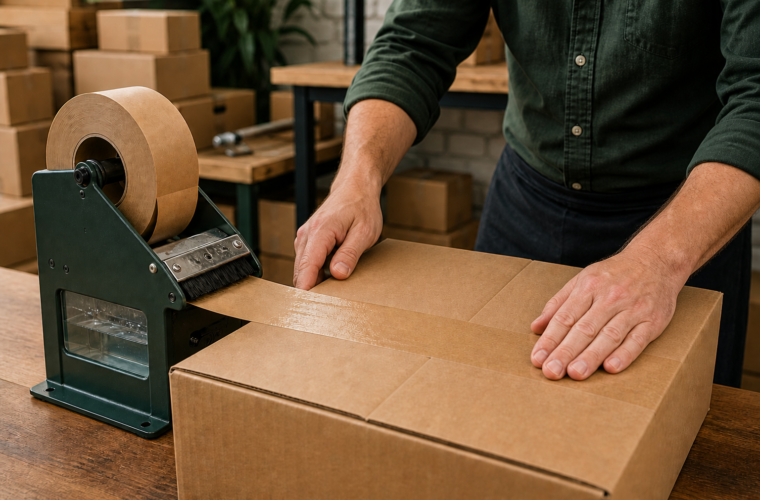
Restaurant teams may pack ecommerce orders outside service hours. Decide where the water-activation equipment will sit, who prepares it and where rolls will be stored. Ask for application guidance for the proposed tape and equipment.
Do not assume that a counter used for food preparation is the right place to maintain the shipping setup. Plan a suitable packing area for the outer parcels within the business’s own operating procedures.
Send a useful enquiry
Describe the retail products, outer carton, packing protection, artwork, quantity and destination. State that the tape is for the outer shipping box. Ask which configuration can be evaluated and whether sample support is available for that order.
That conversation keeps branding connected to the real shipping task, while leaving food packaging and product protection in their proper place.
For the next step in this decision, see Custom Packaging Tape for Shopify Stores: A Fulfillment Planning Guide.
Frequently Asked Questions
Can the tape seal a food container directly?
Direct food-contact suitability is not confirmed. This guide concerns outer corrugated shipping cartons.
Should each sauce flavor have its own tape?
Not necessarily. A shared restaurant logo can serve outer cartons while product identification stays on the correct product label.
Does tape protect glass bottles?
It is part of carton closure. Bottle protection and leakage control require their own packaging decisions.