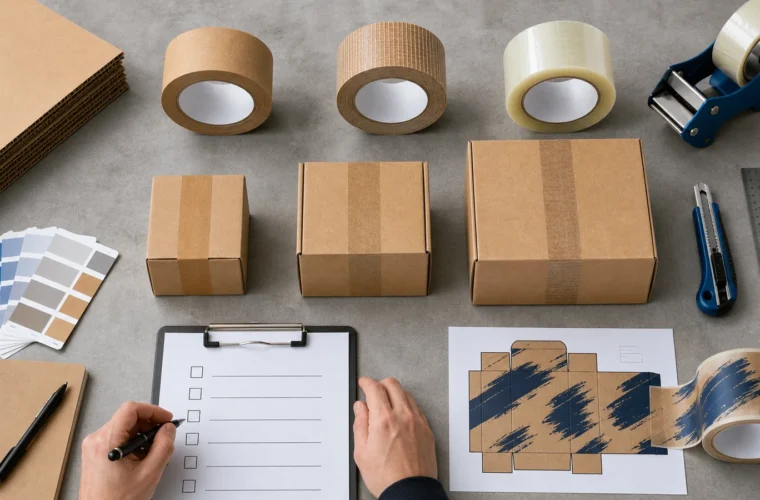
AI-generated editorial illustration, not a product test or customer case. Any displayed timings are illustrative, not measured results.
The roll seems to disappear faster than the order count suggests. Before buying a longer roll or changing material, look at what never reaches a finished carton.
Custom packing tape waste can come from several different actions: cutting an unusable piece, replacing a poorly positioned strip, changing artwork between batches or discarding material after an application problem. Combining them into one waste figure hides the decision you need to make.
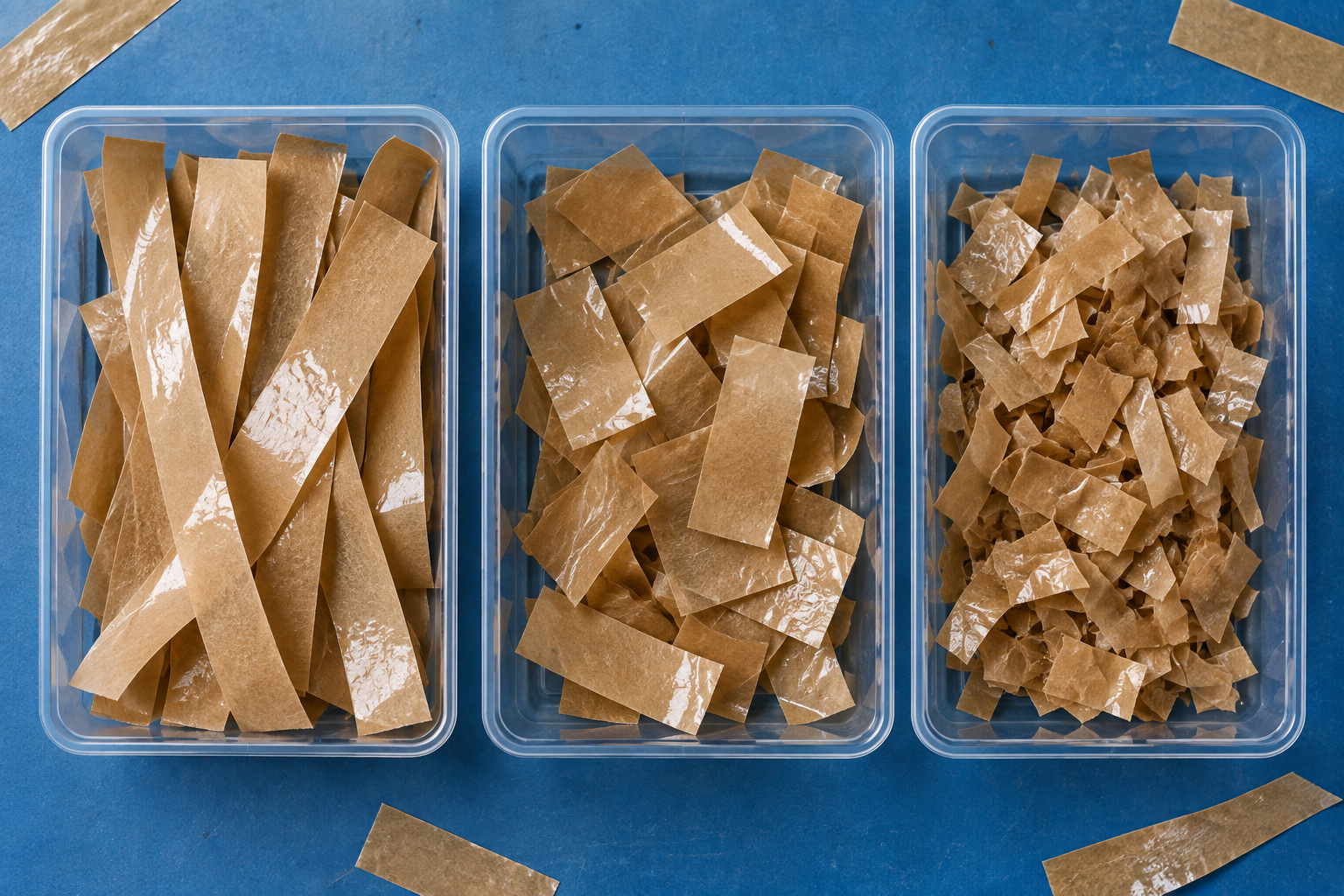
Follow the offcut, not just the roll
During a normal packing session, keep unused dry offcuts separate from pieces removed after application, where that can be done safely without interrupting the work. Note why each piece was discarded. Do not ask staff to recover tape from blades or moving equipment.
Use a short record with the carton type, approximate strip length and reason. The record is a shop-floor observation, not a certified test. If a piece cannot reasonably be measured, record that limitation instead of turning a guess into an exact length.
The useful distinction is between material that was never needed and material that became unusable because something else went wrong.
Match the pattern to a decision
| What you observe | What to investigate first |
|---|---|
| Long unused tails on otherwise acceptable cartons | The chosen cut length and the approved closure arrangement |
| Repeated cuts made to keep a complete logo visible | Artwork repeat and the shortest carton in the mix |
| Strips removed and replaced | Carton surface, application method and operator instructions |
| Material discarded during brand changes | Batch order and artwork changeover |
| Damaged stock taken from storage | Handling and the supplier's storage guidance |
A shorter strip is not automatically a better strip. Preserve the closure that has been evaluated for the carton. If the current length is necessary, the unused-looking portion is not evidence of avoidable waste.
Likewise, do not solve an application problem by asking packers to use a questionable strip. Investigate the reason for replacement.
Change one input, then look again
Choose the issue that appears repeatedly. If it is artwork positioning, review a physical-size layout on the actual carton before ordering another design. If it is inconsistent cutting, review the equipment settings and instructions appropriate to that equipment.
Keep other conditions reasonably comparable when observing the next session. Record changes in carton mix and operator experience rather than attributing every difference to the tape.
There is no universal waste percentage in this guide. A measured result belongs to the particular packing session, not to every business using the product.
Keep waste separate from purchasing units
BrandTapeCo’s standard online roll length is 50 m. That figure describes supplied length, not a promise that every meter becomes a useful carton closure.
Use the observations to improve your own purchasing estimate. Keep normal sealing use and observed losses visible as separate inputs. Avoid adding an arbitrary allowance simply because another shop uses one.
When discussing custom kraft paper tape with a supplier, show the relevant carton, cut length and artwork. A photograph of the offcut pattern can explain the problem more clearly than saying that a roll does not last.
Leave the packer a better instruction
After reviewing a change, update the appropriate packing note: the approved cut setting, the artwork orientation or the action to take when a strip does not apply as expected.
The objective is not to make the waste bin look empty. It is to understand which losses can be addressed without weakening the shipping task.
Frequently Asked Questions
Can I count every overhanging piece as waste?
No. Some length may be necessary for the evaluated closure. Investigate before shortening it.
Does a 50 m roll seal a fixed number of boxes?
No. Carton dimensions, closure arrangement and actual use determine the number.
Should I reuse a discarded wet strip?
Do not assume it remains suitable. Follow the applicable application guidance and resolve the cause of the discard.