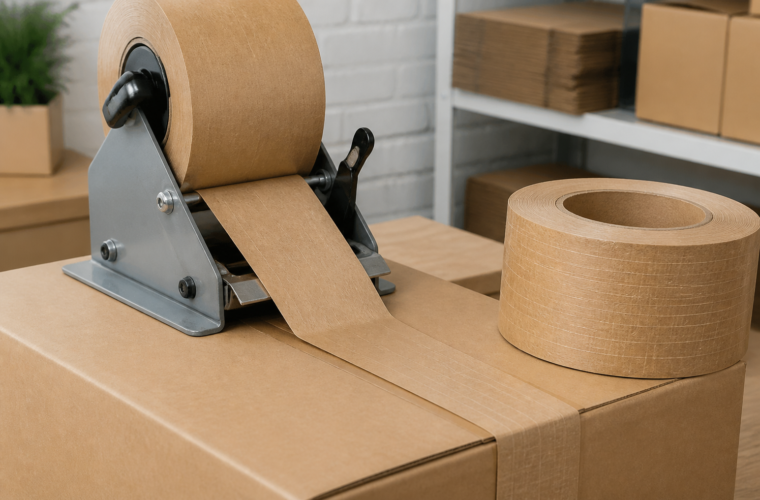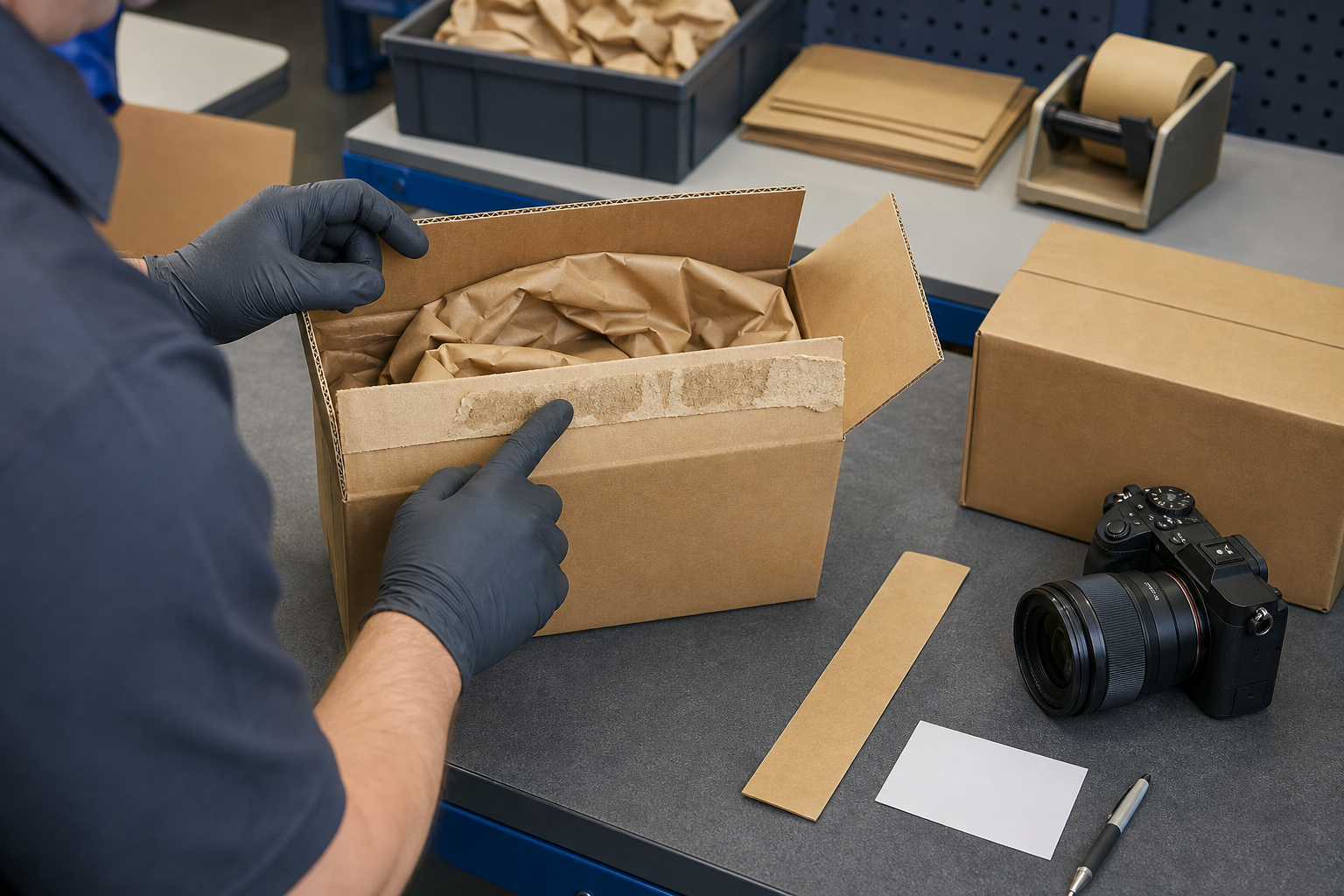
Water activated tape return shipments create a simple but important distinction: the original outbound seal has been broken, and any new strip is a new closure. Resealing the box can make it suitable for another controlled movement, but it does not recreate the original seal history or prove what happened before the return reached the facility.
A reliable returns process therefore starts with inspection and documentation. The decision is not merely “Can tape stick to this box again?” It is “Is this carton still fit to use, what old evidence must remain visible, and how should the new closure be identified?”
What Opening Does to a Water-Activated Tape Seal
Water-activated paper tape bonds with corrugated carton fibers. When it is removed, the tape, printed surface, or outer liner may show tearing, delamination, residue, or other visible disturbance. The result varies with the tape construction, board surface, application, and opening method.
Visible disturbance can help an inspector notice that a carton was opened. It should not be treated as proof of who opened it, when it happened, whether contents changed, or whether theft occurred. The tamper-evident shipping tape buyer guide explains why evidence of access is different from prevention.
A Resealed Box Has Two Separate Histories
Treat the package record as two events:
| Event | What the tape can show | What the tape cannot establish alone |
|---|---|---|
| Original outbound seal | Approved closure was applied; later disturbance may be visible | Chain of custody, contents, or cause of opening |
| Return or onward reseal | A new closure was applied at a recorded point | That the box remained untouched before the new seal |
Do not cover the old opening evidence before the receiving decision is documented. Once a new strip is applied over a damaged area, the facility may lose useful information about the carton’s arrival condition.
Inspect the Return Before Deciding to Reuse the Carton
Create a defined receiving area and inspect the parcel before it is routed back to stock, refurbishment, customer service, claims, or disposal.
Record:
- return authorization or shipment reference;
- arrival date and carrier information;
- condition of the outer carton;
- location and appearance of the original tape;
- extra tape, labels, staples, or other closure changes;
- visible opening, crushing, puncture, moisture, or contamination;
- product and internal packaging condition;
- photographs required by the company’s procedure;
- disposition decision and approver.
The carton seal disturbance evaluation provides a focused method for describing what is visible without turning the observation into an unsupported security conclusion.
Decide Whether the Carton Is Fit for Another Shipment
A returned box should not be reused simply because its flaps can be closed. Review the carton as a shipping component.
| Check | Reuse question | Reason to reject or escalate |
|---|---|---|
| Structure | Are panels, corners, flaps, and seams intact? | Crushing, tears, punctures, delamination, or loss of shape |
| Closure surface | Is there enough sound linerboard for the approved new seal? | Large areas of torn, coated, contaminated, or loose fiber |
| Cleanliness | Is the carton dry and free of contamination? | Moisture, oils, odors, product leakage, or unknown residue |
| Size and fit | Does the carton still fit the product and protective materials? | Excess void, overfill, or damaged inserts |
| Labels | Can old shipping and hazard information be removed or fully controlled? | Conflicting address, barcode, routing, or required marks |
| Appearance | Does reuse meet the brand and customer policy? | Excess damage or previous markings that create confusion |
| Policy | Is reuse allowed for this product, destination, and carrier process? | Regulated, high-risk, or customer-specific restriction |
If the carton fails a structural, contamination, labeling, or policy check, use an approved replacement carton. More tape is not a repair for a box that no longer meets the packaging requirement.
Do Not Seal Directly Over an Uncontrolled Surface
The area left by the original tape may be rough, torn, uneven, or covered with loose paper fibers. Applying a new strip in exactly the same position can create inconsistent contact.
Before resealing:
- follow the site’s rule for removing or retaining loose original tape;
- keep required evidence and photographs before changing the surface;
- remove loose debris without damaging the carton further;
- identify a sound closure path with adequate seam coverage;
- confirm that labels and barcodes will not be hidden or duplicated;
- run a representative closure check when the reuse setup is new.
The correct placement depends on the carton and policy. Do not prescribe a universal offset or extra strip count without testing. The carton seam and tape coverage guide helps teams define the actual closure path.
Choose a Resealing Workflow Based on the Next Movement
Customer return to the same facility
The return may only need to survive the inbound route. Provide the customer with instructions that match the return program and do not assume they own a compatible water-activated tape dispenser. If the original carton cannot be closed under the program’s instructions, allow an approved alternative package where policy permits.
Inspection followed by internal movement
After receiving, the box may move between inspection, refurbishment, and inventory areas. Use an internal closure method and status label that cannot be confused with a customer-ready outbound seal.
Repack for a new customer shipment
Apply the same packaging release standards used for a normal outbound order. If the returned carton is reused, its condition, old labels, closure surface, product protection, and presentation all need approval. A new branded strip does not erase signs of prior use.
Return to supplier or claims handling
Preserve the evidence required by the commercial or carrier process before repacking. Photograph and document the original condition first. Follow the relevant supplier, carrier, or insurance instructions instead of allowing tape choice to determine evidence handling.
Make the New Closure Identifiable
For operations that routinely process returned cartons, an internal status method can prevent confusion. Depending on the company’s procedure, the record may include:
- inspection date and station;
- return authorization;
- disposition status;
- name or ID of the authorized operator;
- carton reuse approval;
- new tape or closure specification;
- reason for repack or reseal.
This information can live in the warehouse system or a controlled label. Do not print sensitive customer data or temporary return instructions on long-lived custom tape inventory.
Test the Reused-Carton Closure as Its Own Application
The original outbound carton test may not cover a torn or previously sealed liner. Build a smaller validation around the actual reuse condition.
Test at least:
- the common carton SKU after ordinary opening;
- the intended surface preparation;
- the approved new tape and dispenser;
- the defined closure path;
- the real packed load and internal protection;
- the expected next route and handling;
- the inspection points required by the returns procedure.
Record the results rather than assuming a second strip restores original performance. The water-activated tape application test can be adapted for this controlled reuse specimen.
Common Returns Mistakes
Covering evidence before receiving inspection
Once the original seal area is altered, arrival-condition evidence may be lost. Document first.
Treating visible fiber tear as a security verdict
Fiber tear shows disturbance, not cause, identity, time, or intent.
Adding multiple strips to a weak carton
Extra tape cannot restore crushed corners, punctured panels, wet board, or failed internal protection.
Reusing old labels
Old barcodes and addresses can create routing errors. Control or remove them under the shipping process before the next movement.
Applying branded tape to an internal hold carton
A customer-facing branded seal can make an unapproved carton look finished. Keep hold, inspection, and released statuses unmistakable.
Where BrandTapeCo Tape Fits the Reseal Workflow
BrandTapeCo’s custom printed water-activated kraft tape is available in standard or reinforced kraft paper and bonds with corrugated carton fibers. The current site describes visible seal disturbance as an indicator that opening may have occurred, not an absolute theft-prevention guarantee. It does not publish a universal procedure or performance guarantee for resealed return cartons. Establish that workflow and test with the actual box.
Frequently Asked Questions
Can a box sealed with water-activated tape be reused?
Possibly, if the carton remains structurally sound, clean, correctly labeled, suitable for the product, and allowed by the company’s packaging policy. Inspect it before resealing.
Can I put new water-activated tape over the old tape?
Do not make that the default. The old strip or torn liner may be uneven and contaminated. Document the original condition and define a tested new closure path.
Does resealing restore the original tamper evidence?
No. It creates a new closure from a known point. It does not recreate or prove the history before resealing.
Should customers use water-activated tape for returns?
Only if the return instructions, available equipment, and package condition support it. Many customers will not have a compatible dispenser, so the return program needs a practical approved method.
Is a visibly torn carton safe to reship?
Not automatically. Evaluate structural condition, product protection, closure surface, labels, contamination, route, and policy. Use a replacement carton when the package does not pass.
Can branded tape be used on a returned box sent to another customer?
Only after the carton and contents pass the normal outbound release process. Branded tape should not make an unapproved reused carton appear shipment-ready.
Treat Every Reseal as a New Closure Event
Record the original opening before changing the carton, then make a separate decision about reuse and the new closure. A fresh strip can secure an approved box for its next movement; it cannot recreate the package history that existed before inspection.
Use BrandTapeCo branded paper tape only after the carton, labels, contents, and closure path pass the outbound release process. The tape should confirm a controlled new event, not make a questionable return look shipment-ready.