Water-activated tape starts as a dry strip of paper with an adhesive that becomes tacky after it is moistened. Once applied to a corrugated box, the activated adhesive makes contact with the carton surface and forms a paper-based closure across the seam.
That short explanation is useful, but buyers usually need more. How does water activated tape work when the board is dusty, coated, cold, recycled, or under stress? Why does a dispenser matter? And what should a packaging team test before replacing pressure-sensitive tape?
The practical answer begins with four parts of the system: the tape, the water, the corrugated surface, and the application process.
What Happens When Water Activates the Adhesive?
Gummed paper tape carries a dry adhesive layer. Water changes that layer from dry to active, allowing it to wet the surface of the corrugated board. The tape is then pressed over the carton seam while the adhesive is in a workable state.
The seal develops through contact between the activated adhesive and the board surface. A well-controlled application gives the adhesive continuous contact across the strip instead of isolated wet and dry spots.
This is different from ordinary pressure-sensitive packing tape. Pressure-sensitive tape arrives tacky and sticks when it is pressed onto a surface. Water-activated tape requires a wetting step before application. That difference affects equipment, operator workflow, and the checks a buyer should run.
For a broader format comparison, see how to choose custom packaging tape.
Why Corrugated Board Is an Important Part of the Seal
Corrugated shipping boxes are not perfectly smooth. Their outer liner has fibers, pores, printing, recycled content, dust, and other surface characteristics that can change how an adhesive makes contact.
Water-activated tape is commonly selected for corrugated cartons because the activated adhesive can form close contact with the paper liner. When the tape is removed after the seal has developed, the carton surface may show visible disturbance. That can make previous opening easier to notice, but it should not be described as a guarantee against theft or tampering.
The carton still has to be treated as part of the specification. A tape that works on one uncoated kraft box should not automatically be assumed to behave the same way on:
- a heavily printed carton;
- a coated or glossy board;
- a dusty warehouse box;
- a recycled liner with a different surface;
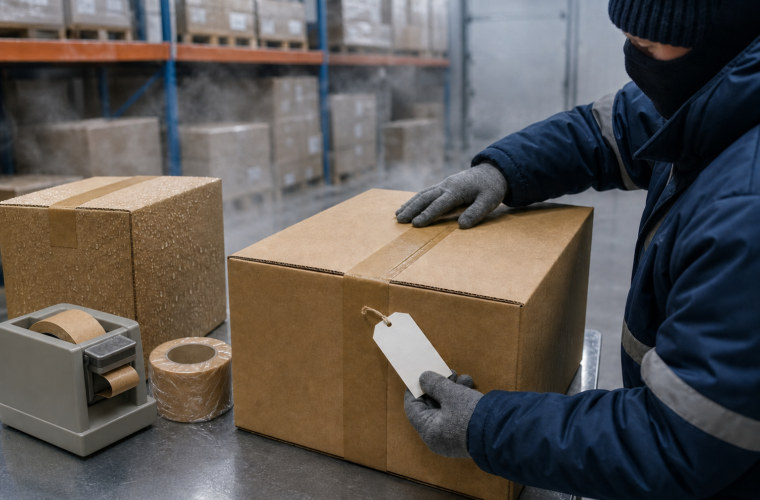
- a damp or very cold carton;
- an overfilled box that pushes against the top seam.
BrandTapeCo recommends confirming demanding carton, storage, dispenser, and testing requirements before ordering. A corrugated carton tape compatibility test provides a more reliable answer than selecting from the tape description alone.
The Four Variables That Make the Process Work
| Variable | What it controls | What can go wrong |
|---|---|---|
| Tape construction | Paper backing, adhesive system, and tear resistance | The material may not fit the carton weight or handling route |
| Wetting | Activates the adhesive across the required area | Uneven activation can create dry spots or excess moisture |
| Carton surface | Provides the surface the adhesive must contact | Dust, coating, moisture, or damage can reduce consistent contact |
| Application pressure | Brings the activated adhesive into contact with the board | Loose placement, wrinkles, or poor seam coverage can weaken the closure |
These variables work together. More water does not automatically create a better seal, and a stronger tape construction does not correct poor application. The purpose of a controlled packing process is to make all four variables repeatable.
Standard and Reinforced Water-Activated Tape
Water activation describes how the adhesive is prepared. It does not tell you everything about the tape construction.
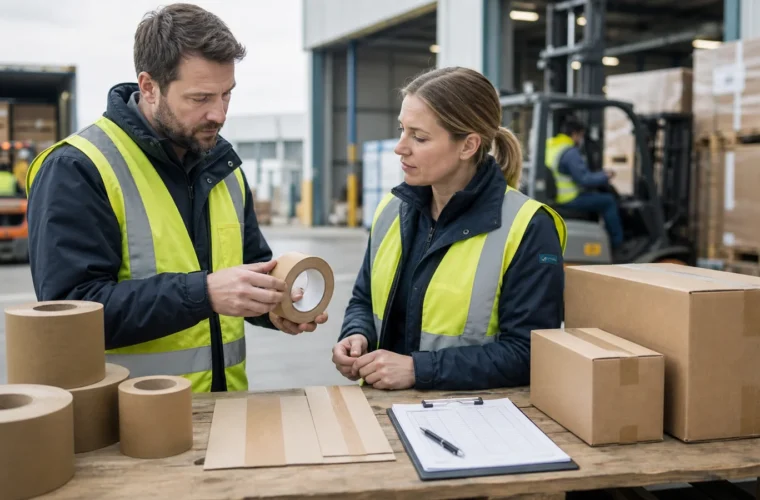
BrandTapeCo currently offers standard kraft paper and reinforced kraft paper options. Standard kraft may be considered for lighter ecommerce cartons and packaging tests. Reinforced material offers greater tear resistance and may be considered for heavier cartons or longer handling routes.
The decision should be based on the packed carton, not on printing alone. Record the box dimensions, packed weight, board condition, seam style, handling route, and dispenser before comparing materials. The reinforced water-activated tape selection guide explains how to structure that review without assigning a universal weight limit.
How a Dispenser Supports Consistent Activation
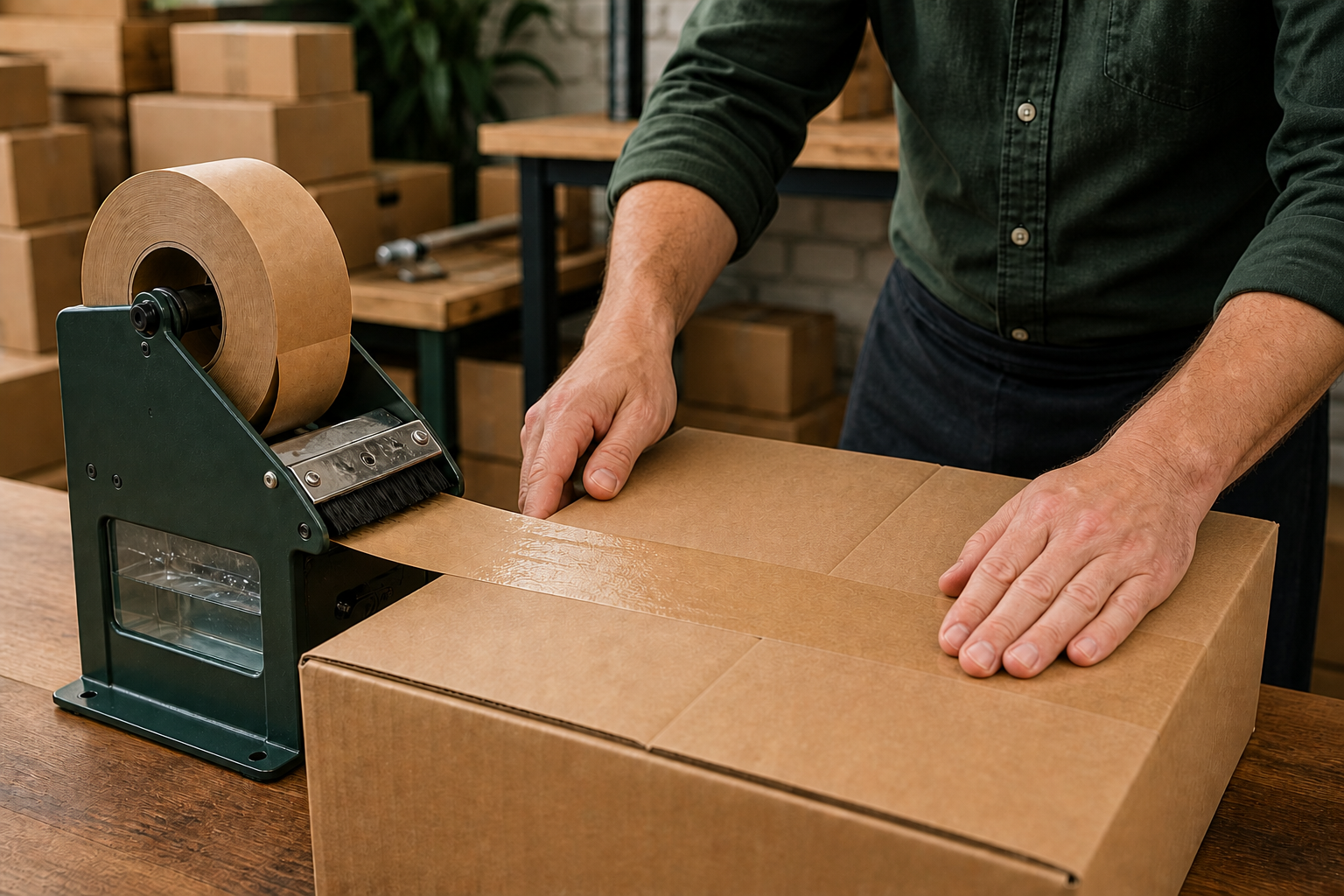
A compatible dispenser wets the adhesive as the tape is drawn or dispensed. Depending on the equipment, it may also help operators cut repeatable lengths for common carton sizes.
The dispenser is not merely an accessory. It affects:
- how evenly water reaches the adhesive;
- how much tape is prepared for each carton;
- how quickly an operator can complete the closing step;
- whether the same method can be repeated across shifts or packing stations.
BrandTapeCo’s current format requires a compatible water-activated tape dispenser. Include the dispenser, operator steps, cleaning routine, and packing volume in the decision—not only the roll price.
What Happens After the Tape Is Applied?
Immediately after wetting, the adhesive needs close, continuous contact with the carton. The operator should smooth the tape over the seam and avoid wrinkles, lifted edges, or placement that misses part of the closure.
The developing seal should not be evaluated by pulling at it instantly and assuming that result represents the completed bond. At the same time, buyers should not invent a fixed bond time that applies to every tape, carton, water level, and environment.
Instead, document the actual process:
- Identify the exact tape and dispenser setup.
- Use representative cartons from normal operations.
- Record how the adhesive was activated.
- Apply a consistent strip length and pressure.
- Observe the seal at defined checkpoints chosen by the packaging team.
- Record lifting, wrinkles, surface disturbance, or other issues.
BrandTapeCo’s water-activated tape application test provides a framework for evaluating the real carton rather than relying on a generic promise.
Where Custom Printing Fits
Printing changes the visible surface of the tape, not the basic need for correct activation and carton compatibility.
BrandTapeCo’s current custom water-activated tape can be ordered in standard or reinforced kraft paper, in 1.89 in (48 mm) and 2.36 in (60 mm) widths. Current printing options include one color, two colors, or full color, with a digital artwork proof before production.
A repeated logo can turn the carton closure into a brand element, but the order should still begin with the functional packaging requirement. Choose the material and width around the carton and process, then prepare artwork that remains readable on the selected kraft background.
A Practical Pre-Order Test
Use a small, controlled test before approving a broader rollout.
| Test step | Record |
|---|---|
| Carton selection | Board type, surface, dimensions, packed weight, and condition |
| Tape setup | Material, width, roll identification, and dispenser |
| Activation | Wetting method and any visible unevenness |
| Application | Strip length, seam coverage, pressure, and operator notes |
| Observation | Edge lift, wrinkles, board damage, or inconsistent areas |
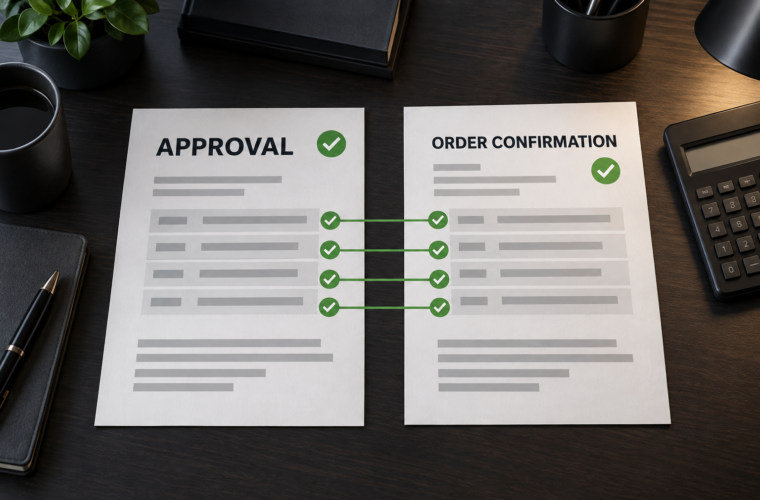
| Decision | Accept, adjust process, test another configuration, or request supplier review |
The goal is not to manufacture a passing result. It is to learn whether the proposed tape and workflow are repeatable on the cartons the business actually ships.
Frequently Asked Questions
Is water-activated tape the same as gummed paper tape?
The terms are often used for the same general format: paper tape with an adhesive that must be moistened before application. Buyers should still confirm the backing, reinforcement, width, and intended use.
Does water-activated tape stick before it gets wet?
The adhesive is designed to be activated with water. It should not be treated like pressure-sensitive packing tape that arrives permanently tacky.
Why can removing water-activated tape mark the box?
The activated adhesive can form close contact with the paper liner. Removal may disturb or lift surface fibers, making opening more visible. Results depend on the tape, carton, and application.
Does water-activated tape work on every corrugated box?
Do not assume it will. Printing, coatings, recycled liner, dust, moisture, temperature, damage, and seam stress can affect the application. Test the real carton.
Do I need a dispenser?
A compatible dispenser supports even wetting and a repeatable workflow. Manual activation may be possible in limited situations, but the process should be evaluated for consistency and packing volume.
Is reinforced water-activated tape always better?
Not automatically. Reinforced material may be appropriate when additional tear resistance is needed, while standard kraft may suit lighter cartons. Choose from the packed-carton requirement and a representative test.
Conclusion
So, how does water activated tape work? Water activates the dry adhesive, the tape is pressed across the carton seam, and the adhesive develops contact with the corrugated liner. The quality of the result depends on the tape construction, wetting, carton surface, pressure, and workflow—not on the product label alone.
If a paper-based, visibly branded carton closure fits your operation, review BrandTapeCo’s custom printed kraft packing tape options and test the selected configuration on your actual boxes before approving production.