Packing tape is not one material. It is a layered product built around a backing and an adhesive system, often with a release treatment, primer, printing, or reinforcement. The combination determines how the roll unwinds, how it is applied, and how it interacts with a corrugated box.
When buyers ask what is packing tape made of, the most useful answer separates the construction into functional layers instead of treating “paper” or “plastic” as a complete specification.
The Basic Anatomy of Packing Tape
| Layer or component | Job in the construction | Questions for the supplier |
|---|---|---|
| Backing | Carries the adhesive and provides handling properties | Paper or film? Thickness? Reinforced? |
| Adhesive | Creates contact with the carton or other substrate | Pressure-sensitive or water-activated? Formulation and use guidance? |
| Primer or tie layer | Helps the adhesive remain attached to the backing | Is one used, and does it affect handling or disposal claims? |
| Release treatment | Helps the roll unwind without bonding to itself | What unwind and storage guidance applies? |
| Reinforcement | Adds structure or tear resistance in some paper tapes | What reinforcement and performance evidence apply? |
| Ink or print layer | Carries branding, instructions, or security messaging | Print method, colors, coverage, proof, and rub resistance? |
Not every tape contains every layer. A supplier data sheet should identify the construction for the exact product being evaluated.
Common Packing Tape Backings
BOPP film
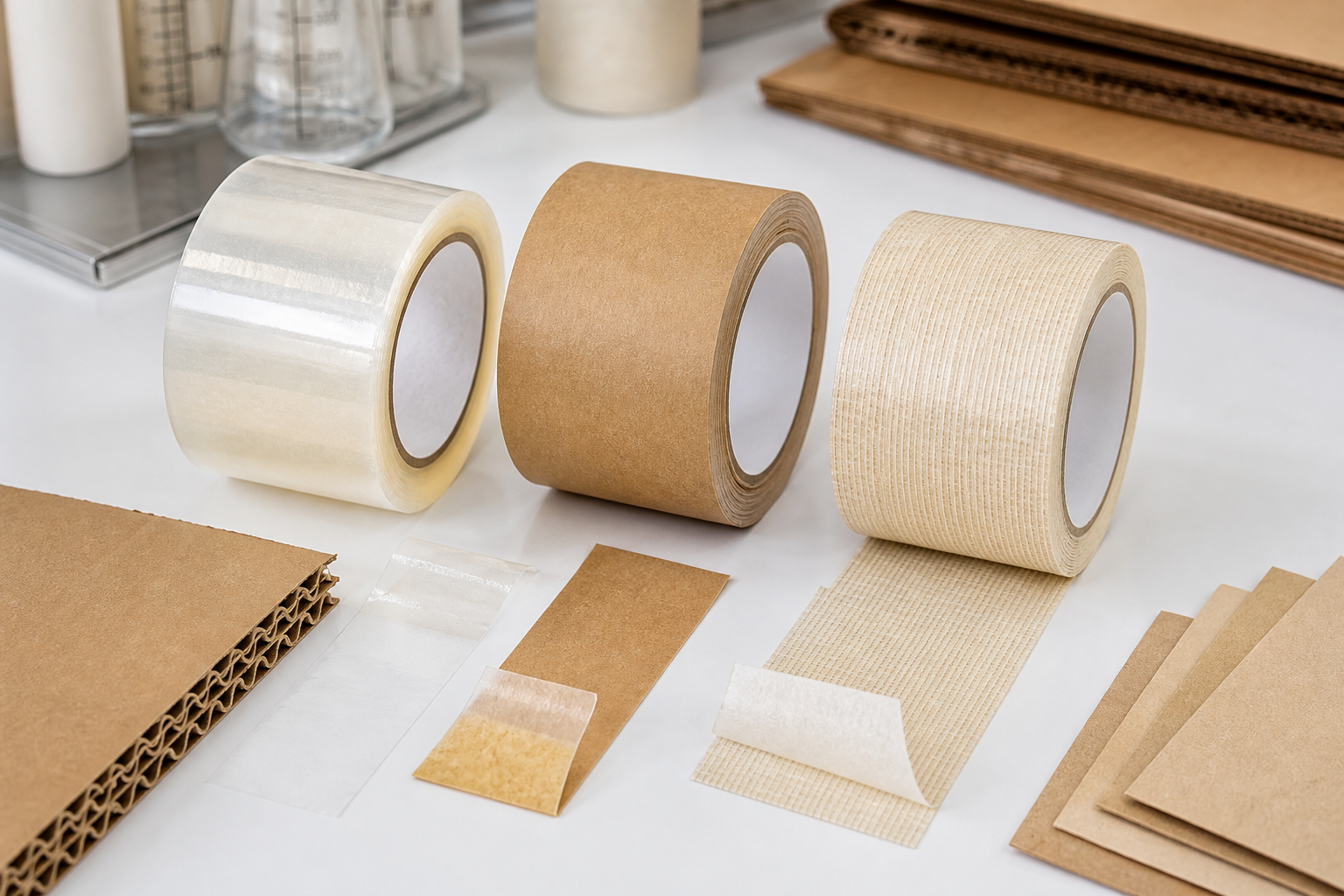
Biaxially oriented polypropylene, commonly shortened to BOPP, is a widely used film backing for pressure-sensitive carton-sealing tape. It can be clear, colored, or printed. The backing is only part of the system; adhesive formulation and application conditions still matter.
PVC film
Some packing tapes use polyvinyl chloride film. PVC tape may have different handling and unwind characteristics from BOPP, but category-level descriptions should not substitute for product data.
Paper or kraft paper
Paper packing tape uses a paper backing. It may be water-activated or pressure-sensitive. Brown kraft appearance does not tell you which adhesive system is present.
The water-activated tape vs self-adhesive paper tape comparison explains why two paper-looking tapes can require different packing workflows.
Reinforced paper
Reinforced paper tape adds reinforcing material to the paper construction. Buyers should ask what the reinforcement is, how it is arranged, and which claims are supported for that exact product. The kraft tape vs reinforced kraft tape guide provides a carton-based evaluation framework.
Common Adhesive Systems
Pressure-sensitive adhesives
Pressure-sensitive tape arrives with a tacky adhesive and bonds when it is pressed against a surface. Acrylic, hot-melt rubber, and natural- or synthetic-rubber systems are common categories, but actual formulations vary.
The adhesive category can influence initial tack, temperature behavior, aging, unwind, and compatibility. Those are product-specific questions; a buyer should not infer them from backing material alone.
Water-activated adhesive
Water-activated paper tape carries a dry adhesive that becomes tacky after wetting. The activated strip is pressed onto corrugated board. Dispenser wetting, carton surface, contact, and operator technique are part of the closure system.
The water-activated tape vs BOPP tape comparison contrasts this application method with pressure-sensitive film tape.
Why the Same Backing Can Behave Differently
Two BOPP tapes can use different pressure-sensitive adhesives. Two kraft paper tapes can use different paper grades, reinforcement, coatings, or activation systems. Printing can also change the surface and approval process.
That is why “paper packing tape” and “film packing tape” are starting points rather than purchase specifications. A comparison should normalize:
- backing and thickness;
- adhesive or activation method;
- reinforcement;
- width and roll length;
- dispenser requirements;
- carton surface and packed load;
- application and storage conditions;
- printing and proof requirements;
- evidence for any environmental or performance claim.
Printing Adds Another Material Layer
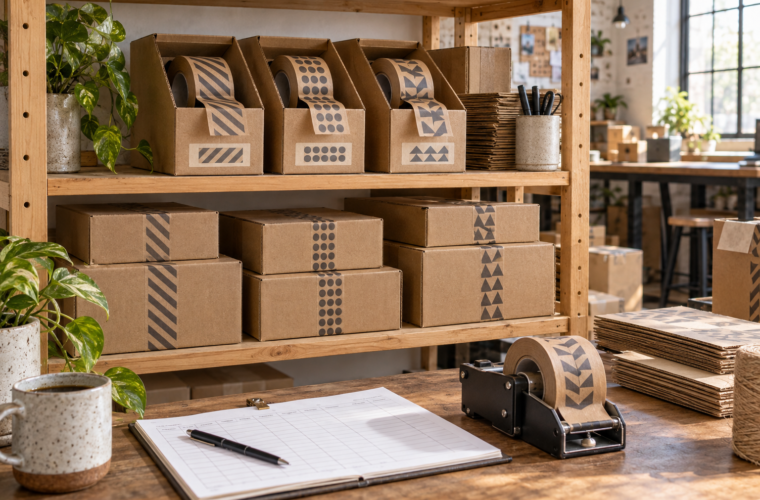
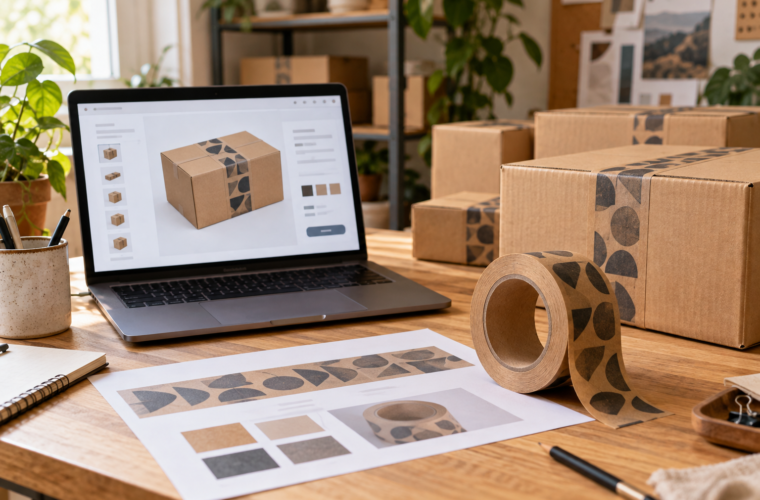
Custom printed tape adds ink to the construction. Buyers should confirm color options, print method, coverage, artwork requirements, repeat, proofing, and any effect on recycling or disposal claims.
BrandTapeCo currently offers one-color, two-color, and full-color printing on its custom water-activated kraft paper tape. The product can use standard or reinforced kraft paper in 1.89 in (48 mm) and 2.36 in (60 mm) widths, with a 164 ft (50 m) roll length. A digital production proof is required before printing.
Those specifications apply to BrandTapeCo custom kraft paper packing tape, not to every paper tape.
Materials and Environmental Claims
A paper appearance does not prove that the complete tape is recyclable, compostable, plastic-free, or accepted in every local system. Ink, coating, adhesive, reinforcement, labels, carton construction, contamination, and local rules may all matter.
Use the paper packaging tape environmental claims checklist to ask for product-specific evidence before publishing a claim.
A Better Way to Compare Tape Materials
Start with the job, then compare constructions:
- document carton board, seam, sizes, packed weights, and route;
- define the application method and available equipment;
- request complete construction data for each candidate;
- test representative cartons under approved conditions;
- compare performance observations and commercial terms separately;
- retain the data sheet and approved specification for reorders.
This process prevents a buyer from choosing “paper” or “plastic” based only on appearance or a broad category claim.
Frequently Asked Questions
Is packing tape made of plastic?
Many pressure-sensitive packing tapes use plastic film backings such as BOPP or PVC. Paper-backed packing tapes are also available.
What is the sticky part of packing tape made from?
It depends on the product. Pressure-sensitive systems may use acrylic or rubber-based adhesive categories; water-activated paper tape uses an adhesive activated by moisture. Ask for exact supplier data.
Is brown packing tape always paper?
No. Color alone does not identify the backing or adhesive system.
Does reinforced paper tape contain non-paper material?
Some reinforced constructions include reinforcing materials. Confirm the exact composition before making disposal or recycling claims.
Is paper packing tape better for corrugated boxes?
It can be suitable, but selection depends on the exact tape, carton, application, route, and test results.
Turn the Material Name Into a Specification
“Paper tape” or “plastic tape” is only the beginning of a useful description. Record the backing, adhesive system, reinforcement, dimensions, print layer, application method, and evidence required for the intended carton.
For custom water-activated kraft tape, BrandTapeCo can confirm the available construction and printing choices. Any additional performance or environmental claim should remain open until the exact product and test evidence support it.