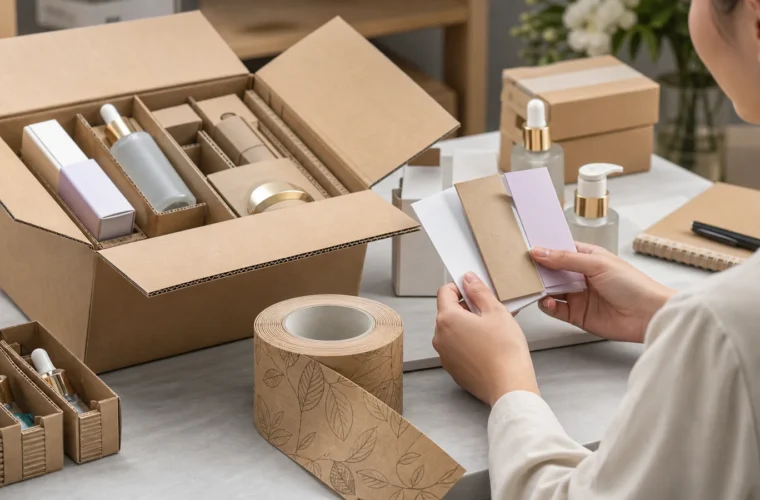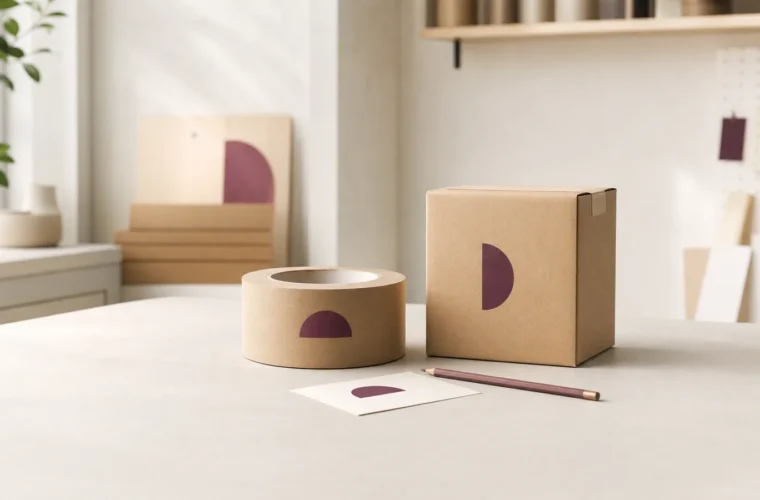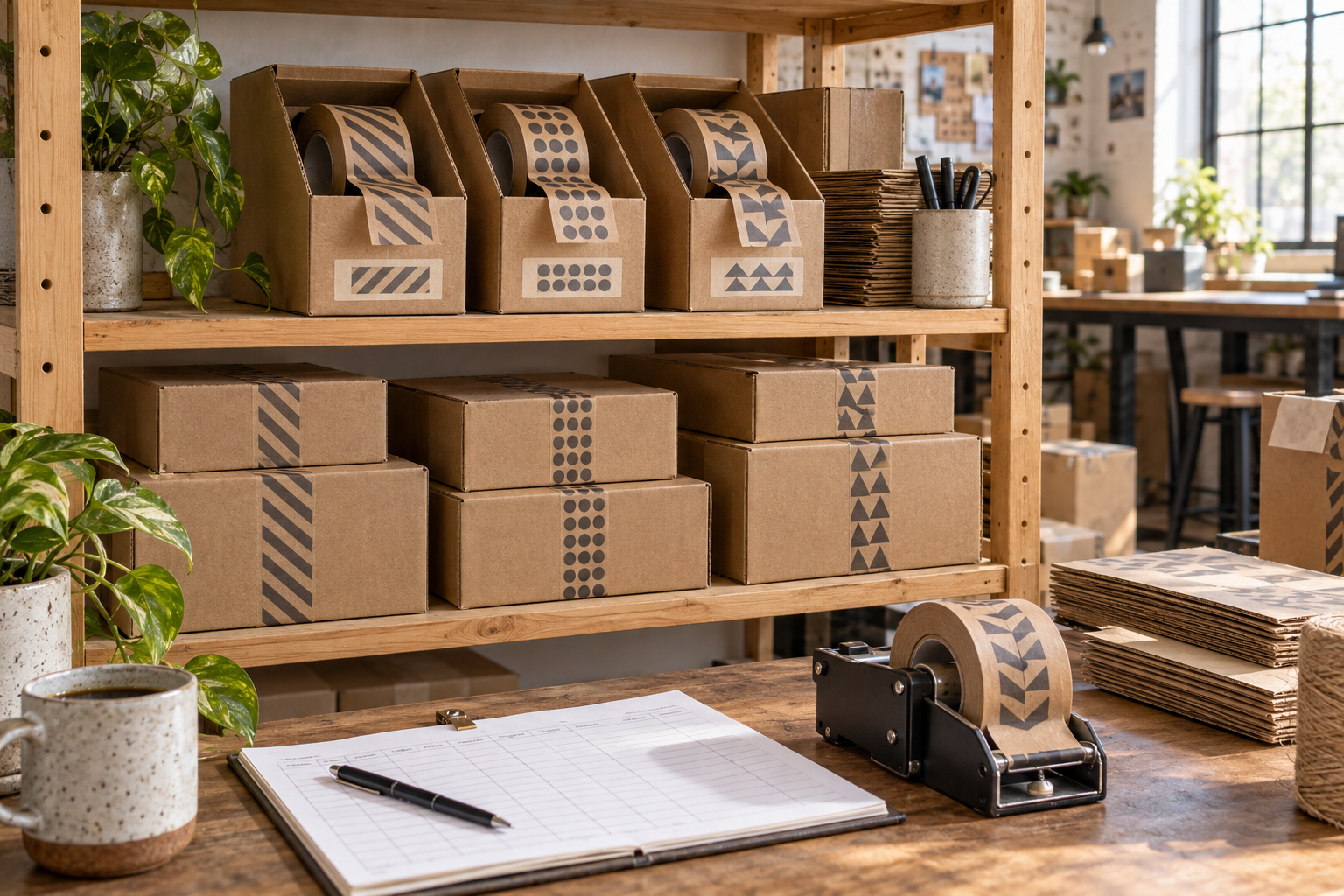
In a shared studio, a tape roll can look like communal equipment even when one maker paid to print a business logo on it. A clear ownership system prevents borrowed supplies becoming incorrectly branded parcels.
Set the rules before leaving the first custom order on a shared shelf.
Identify who owns each roll
Store printed tape with a brand name, configuration reference and contact. Keep partly used rolls with the same identifying record as unopened stock.
Do not rely on the print being visible on the outer wrap. Packaging can cover the logo, and a small section of repeat may not identify the brand clearly.
Where possible, separate private supplies from shared tools. The dispenser may belong to the studio while the roll belongs to a particular business.
Agree on the shared equipment handoff
Before installing a different tape, check the equipment’s documented limits and the relevant application instructions. A common station does not establish compatibility with every roll brought into the studio.
After use, return the roll to its identified storage if that fits the equipment and handling guidance. Leave the bench ready for the next person according to the studio’s procedure.
If you notice an application problem, report which tape and setup were involved. “The dispenser does not work” is less useful than a description tied to a particular roll and method.
Keep quantities visible without exposing business records
A simple stock card can record rolls taken and returned. There is no need to put customer information or order details on the shared shelf.
If a helper packs on a maker’s behalf, provide the artwork reference and approved packing photo. The helper should be able to identify the correct supplies without opening another business’s files.
Decide in advance whether supplies may ever be borrowed. Permission to use blank packaging should not be treated as permission to send another brand’s logo.
Plan a small order around your own use
BrandTapeCo’s online minimum is 5 rolls per selected configuration. The fact that several makers share a room does not mean several designs can be pooled into one standard minimum.
If the studio wants common branding, agree on how that identity relates to each seller and ask about the intended order. If members need separate branding, estimate quantities separately.
Standard online rolls are 50 m long. Storage guidance should follow the supplier’s applicable instructions; this article does not assign temperature limits or shelf life.
Make leaving the studio part of the handoff
When a maker moves out, remove their supplies from the active packing area and close the shared stock record. A forgotten roll can otherwise appear months later on someone else’s shipment.
Good shared-space control is mostly identification and communication. It lets each business use a common bench while keeping its own branding and purchasing record intact.
Frequently Asked Questions
Can studio members share one printed roll?
Only when the agreed branding and packaging use make sense for all parties. Obtain the owner's agreement.
Does shared storage change the minimum order?
No standard exception is confirmed. Separate designs and unusual arrangements require enquiry.
What should a helper know before packing?
The correct brand, artwork reference, carton and application instruction, plus where finished parcels go.