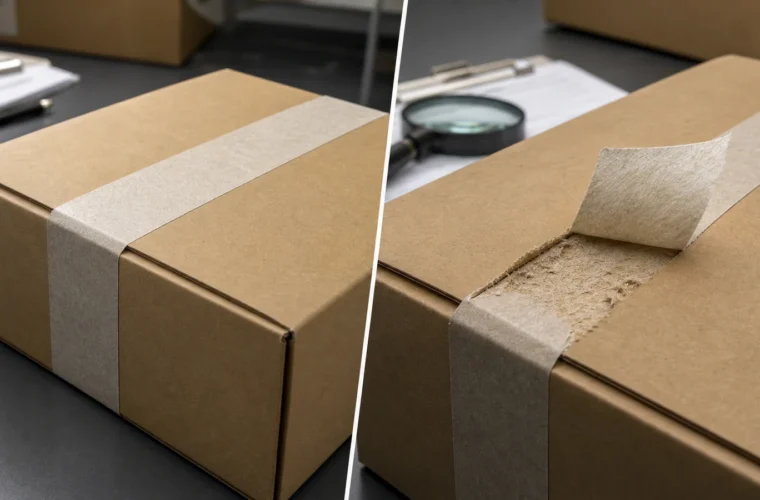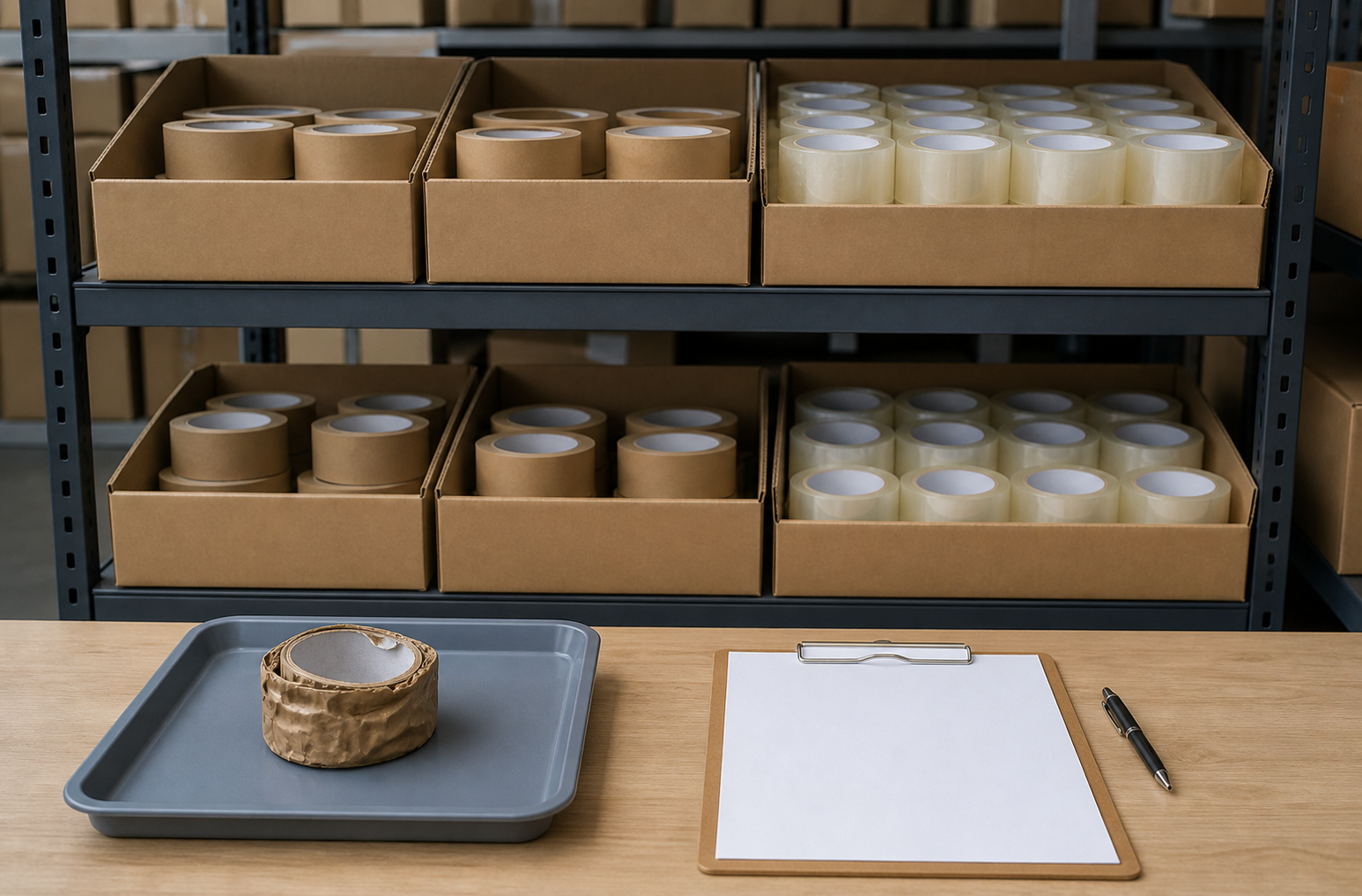
Packing tape does not usually fail at one universal expiration date. Its usability changes with the tape construction, adhesive system, packaging, storage conditions, and time. A roll can look normal while producing an unreliable seal, so appearance alone is not enough.
If you are asking how long does packing tape last, the defensible answer is: follow the manufacturer’s documented storage guidance and test questionable stock on the actual cartons before using it for shipments.
Why There Is No Universal Packing Tape Shelf Life
“Packing tape” covers different materials and adhesive systems. Pressure-sensitive film tape, self-adhesive paper tape, and water-activated paper tape do not age in exactly the same way. Even two visually similar rolls may use different adhesive formulations or reinforcement.
Shelf-life statements also depend on defined conditions. A supplier’s time period may assume unopened rolls, original packaging, controlled temperature and humidity, and protection from sunlight. It should not be copied to another product.
When the supplier does not publish a shelf-life figure, record it as not specified and ask for written guidance.
Storage Conditions That Can Shorten Usable Life
| Storage issue | What it may affect | What to check |
|---|---|---|
| Heat | Adhesive flow, roll blocking, backing distortion | Telescoping, sticky edges, uneven unwind |
| Cold | Temporary stiffness or reduced initial tack in some systems | Condition rolls as directed and run a carton test |
| High humidity | Paper dimensions, roll condition, packaging | Waviness, edge damage, moisture exposure |
| Very dry conditions | Paper behavior and dispensability | Curl, brittleness, cracking, supplier guidance |
| Sunlight or UV exposure | Backing and adhesive stability | Discoloration, embrittlement, exposed cases |
| Dust and contamination | Adhesive surface and carton contact | Dirty roll edges, exposed adhesive, dirty boxes |
| Crushing or poor stacking | Roundness and unwind | Flat spots, damaged cores, telescoped rolls |
These are inspection prompts, not proof that a specific roll is unusable. The supplier’s technical information and a representative application test should drive the decision.
Warning Signs Before You Put a Roll on the Line
Pressure-sensitive tape
Look for adhesive transfer, sticky side edges, unusual odor, brittle or distorted backing, difficult unwind, loss of initial tack, or a seal that lifts from the intended carton.
Water-activated paper tape
Look for crushed or out-of-round rolls, damaged paper edges, waviness, brittleness, reinforcement separation, inconsistent wetting, or irregular dispensing. A roll may also perform poorly because the dispenser, water delivery, or carton surface is wrong, so troubleshoot the system rather than blaming age immediately.
The water-activated tape application troubleshooting guide provides a useful issue-recording framework.
A Four-Step Usability Check
1. Identify the exact stock
Record supplier, product code, backing, adhesive or activation method, dimensions, batch or lot information if available, received date, and storage location. Do not combine different products under one “old tape” label.
2. Review documented guidance
Check the data sheet, case label, purchase record, and supplier response for storage range, shelf life, conditioning, and application requirements.
3. Inspect the roll and dispenser
Examine packaging, core, edges, roundness, unwind, and contamination. For water-activated tape, inspect the dispenser and water system as well.
4. Test representative cartons
Use the real board surface, carton sizes, seam, packed configuration, operator, and application method. Compare questionable stock with approved current stock if possible. Record observations and the acceptance owner.
Do not use a quick hand pull as a universal shipping-performance test. Define buyer-approved criteria for the actual operation.
How to Manage Tape Inventory Without Guessing
A simple first-in, first-out system reduces the chance that unidentified rolls sit behind newer cases. Label each received case with:
- product and approved specification;
- receipt date;
- lot or supplier reference;
- storage location;
- opened date when relevant;
- inspection or hold status.
Set reorder triggers from consumption and confirmed supply timing rather than keeping excessive stock “just in case.” The custom tape reorder planning and lead-time planning guide help separate buyer assumptions from supplier-confirmed timing.
What to Ask a Tape Supplier
Use the same questions for every proposed product:
- What shelf life applies to this exact construction?
- From which date is the period measured?
- What unopened and opened storage conditions are required?
- Is conditioning needed before application?
- Which signs require a hold or replacement?
- What test should be run after unusual storage exposure?
- Does printing or reinforcement change the guidance?
Add the answers to the packaging tape roll specification checklist so future reorders retain the same information.
BrandTapeCo Product-Specific Note
BrandTapeCo’s current product page confirms water-activated standard and reinforced kraft paper tape in 1.89 in (48 mm) and 2.36 in (60 mm) widths. It does not publish a universal shelf-life duration or detailed storage range. Buyers should request order-specific storage guidance rather than applying a number from another tape.
Frequently Asked Questions
Does packing tape expire if it is unopened?
It can still age. Original packaging and controlled storage may help, but use the exact supplier’s documented shelf life and conditions.
Can old packing tape still be used?
Only after identification, inspection, and a representative carton test against buyer-approved criteria.
Should packing tape be stored in a garage?
Garages can experience large temperature and humidity swings. Use the product’s documented storage requirements and a controlled location when required.
Does water-activated tape dry out on the roll?
Its adhesive is dry before use by design. Roll condition can still change through moisture exposure, paper damage, poor storage, or age.
Can tape be warmed before use?
Follow supplier conditioning instructions. Do not improvise heating methods that could damage the tape or create a safety risk.
Release Stored Tape With Evidence
Put questionable stock on hold until its identity, storage history, physical condition, and application result are documented. A roll should return to use because it passed an approved carton check—not because it still looks normal or because the team needs it urgently.
For BrandTapeCo custom paper tape, keep the supplier’s storage guidance with the proof and reorder record. That gives the next buyer a traceable rule instead of a guessed expiration date.
Review the Current Tape Options
For a new order, review the current material, width, and printing options and confirm storage needs for the selected configuration.