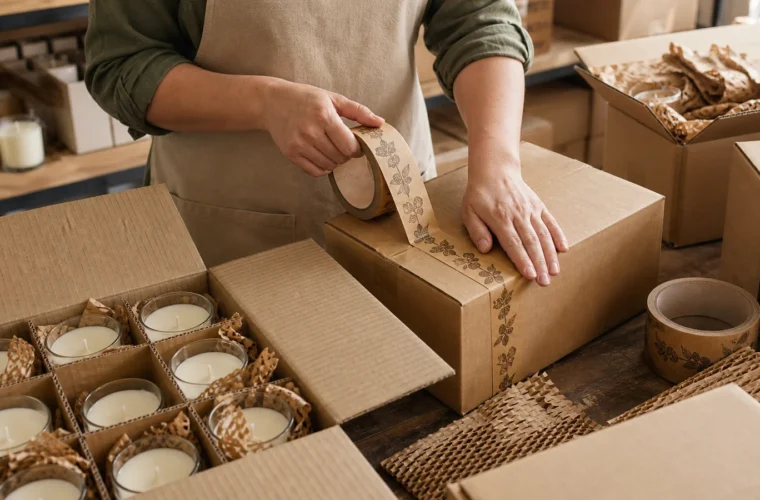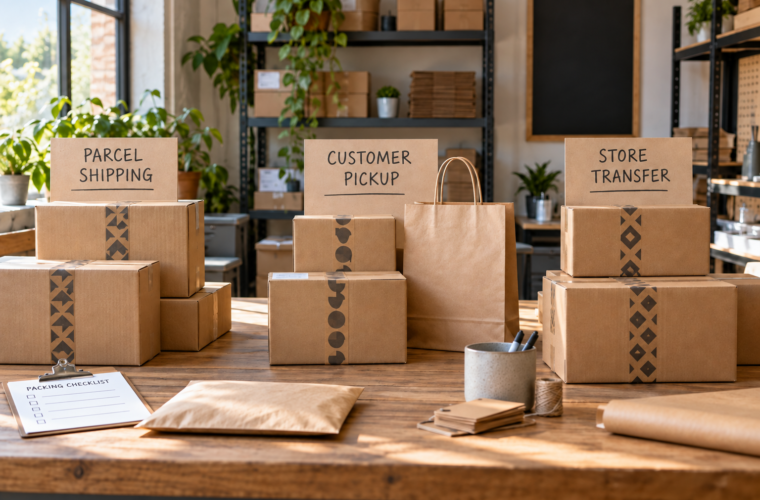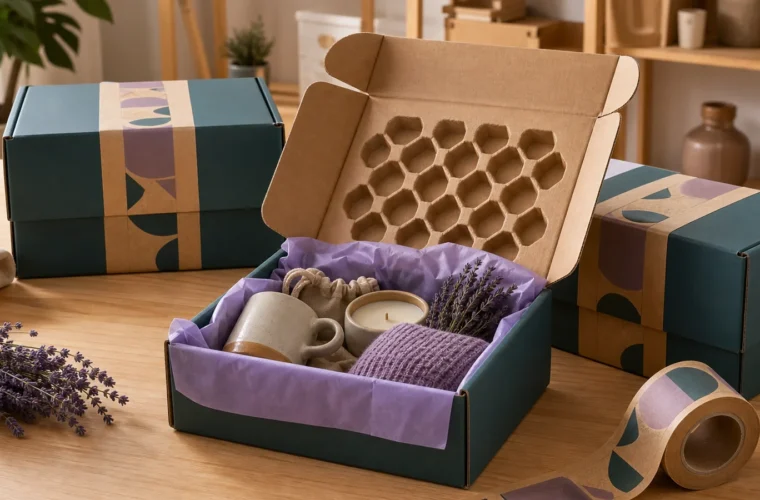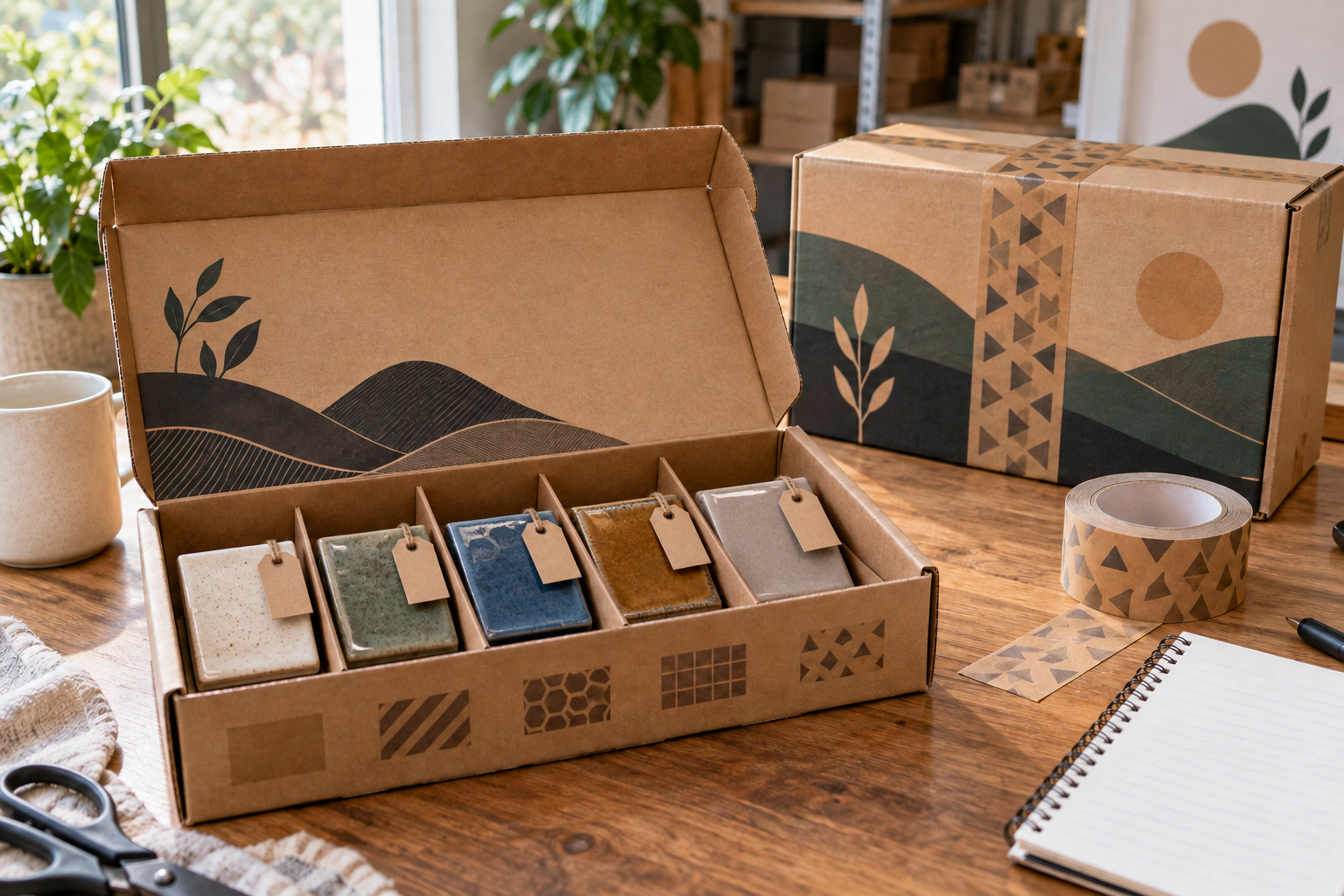
A sample box has a specific job: help a prospective buyer understand and evaluate what you sell. The outer tape can identify the sender, but the useful work continues after the carton is opened.
Plan the kit from the recipient’s desk backward.
Decide what the buyer should be able to do
Choose the action the sample should support: compare variants, review finish, share products with colleagues or prepare a purchasing discussion.
Then check that each item remains identifiable outside the box. A logo on tape will be discarded with the outer closure. It cannot tell the buyer which sample is which once several products are on the desk.
Add a clear item list and relevant product references through the business’s normal documentation. Do not rely on a QR code or tape repeat as the only identification.
Make the opening sequence easy to understand
Pack the kit once and hand it to a colleague who did not assemble it. Ask them to identify the samples using only the information in the box.
Observe where they hesitate. If the first sheet hides the sample labels, change the arrangement. If a product needs an explanation, put it beside that product rather than on the underside of the lid.
This is a usability rehearsal, not a claim about customer response or conversion.
Use the outer branding to introduce the kit
A recognizable logo on the shipping carton can connect the delivery to the earlier sales conversation. Keep the artwork simple enough to survive cutting into normal strips.
The smallest sample carton deserves its own layout check. A design that looks balanced on a large wholesale case may show only part of the mark on a small kit.
BrandTapeCo offers one-color, two-color and full-color printing on its confirmed water-activated kraft tape options. Review the intended design at the chosen width before approval.
Separate sample-kit quantities from regular shipments
Sales kits may be sent irregularly. Estimate the likely number of kits and measure the tape use per carton instead of applying the normal ecommerce consumption rate.
The online minimum is 5 rolls per selected configuration. A stable logo design that also serves ordinary parcels may be easier to manage than a dedicated “sample kit” design, provided the evaluated packaging configuration fits.
If the artwork is reserved for one trade event, consider how remaining rolls will be used afterward.
Prepare a follow-up that refers to the contents
Save the kit version and item list against the shipment record. When the buyer asks about a sample, the team should be able to identify the exact item without relying on memory.
Do not claim that the kit will improve sales by a percentage. The practical benefit of the record is that it makes the next conversation specific.
For the tape enquiry, provide the outer-carton dimensions, artwork, proposed quantity and intended application. Keep the product samples’ own technical documentation separate from the tape specification.
For the next step in this decision, see Custom Tape Proof Approval Checklist for B2B Buyers.
Frequently Asked Questions
Is this the same as ordering a tape sample?
No. This guide concerns using branded tape on a kit containing your own product samples.
Should the product code be printed on the tape?
A variable sample code is better kept with the sample and item list so it remains identifiable after opening.
Do sample kits need special tape artwork?
Only if it serves a clear purpose. A stable brand design may work across kits and other suitable cartons.