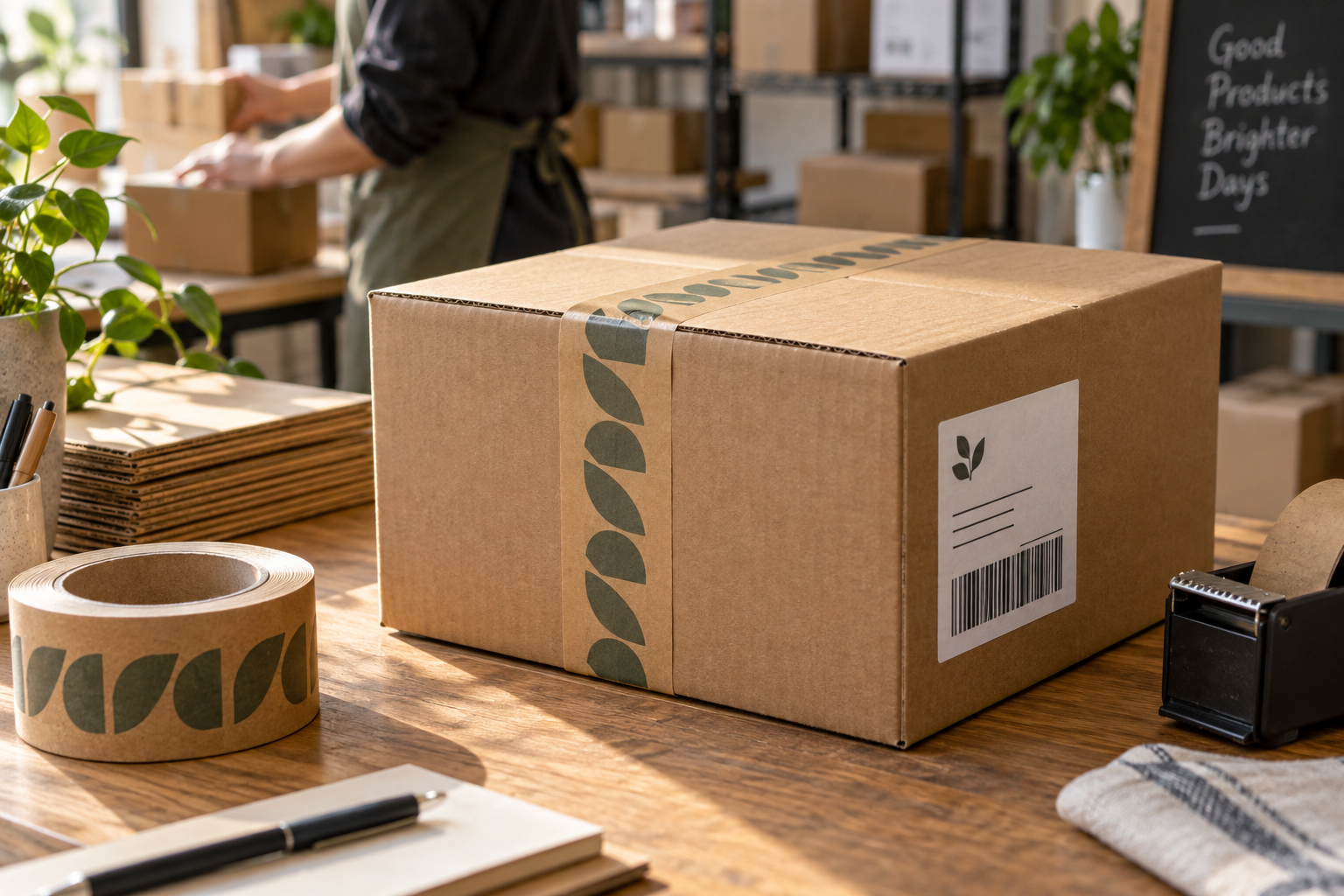
The carton arriving at a retailer has to be received, identified and moved to the right place. Branded tape can identify your business, but the case still needs clear order information.
Ask the retail account how it receives goods before finalizing the carton layout.
Obtain the buyer’s actual receiving instructions
Request the relevant delivery and labeling instructions for that account. Do not assume every retailer has the same rules.
Identify where the purchase-order reference, contents and carton quantity should appear. Confirm any appointment or destination details through the normal commercial process.
These requirements belong to the buyer relationship. A tape supplier cannot infer them from the phrase “wholesale shipment.”
Keep the case label independent of the seal
The tape may cross a carton seam, bend around an edge or be removed during opening. Place receiving information where it can be read without depending on an intact print repeat.
Pack a representative case and photograph the visible sides. Check whether the tape obscures the label or whether the label crosses the opening in a way that causes trouble.
Use a stable brand mark on tape when the same rolls serve multiple retail accounts. Account-specific information can remain on the case label.
Evaluate the actual master carton
A case containing several retail units differs from the individual consumer parcel. Provide carton dimensions, packed weight, board surface and intended handling to the supplier.
BrandTapeCo offers kraft and reinforced kraft options with water-activated adhesive. Selecting reinforcement does not establish a load rating. Evaluate the full carton and closure configuration rather than treating the material name as a performance guarantee.
Record the application equipment and ask about roll compatibility, including dimensions that are not specified in the current product record.
Plan quantity from case shipments
Count the master cartons you expect to send, not only the number of retail units inside them. Measure tape use on the actual case and build the estimate from that figure.
Separate the initial launch shipment from normal replenishment. Otherwise a large opening order can make the regular tape requirement look higher than it is.
For volume or recurring supply, request order-specific terms. The five-roll online minimum is a separate purchasing route and should not be presented as a universal wholesale arrangement.
Save a receiving-ready reference
Keep the approved artwork, tape configuration, case label layout and packing photo together. If the retailer changes its instructions, update the affected document and tell the packing team.
A new account may require different labels while the tape stays unchanged. A new case size may require a fresh packaging check even if the logo is identical.
This distinction helps the business avoid unnecessary artwork changes while still responding to real operational requirements.
Send the supplier a defined enquiry
Include configuration, proposed order quantities, artwork and destinations, plus any packing requirement that affects the tape order. Ask which terms need review before committing to the schedule.
The objective is a clear handoff from your packing bench to the retailer’s receiving process, with branding supporting identification rather than replacing it.
For the next step in this decision, see Wholesale Custom Gummed Tape: A Distributor Specification Checklist; Custom Gummed Tape RFQ Checklist for B2B Buyers.
Frequently Asked Questions
Can branded tape replace the retailer's case label?
Do not assume so. Use the buyer's actual receiving instructions and keep variable order information in the appropriate label.
Is this guide for tape wholesalers?
It is for brands shipping their own goods to retail accounts. Tape distributors have a different procurement task.
Should I use reinforced tape for every master carton?
Discuss the specific carton and handling requirements. Reinforcement alone does not establish suitability or a load limit.