The first online order creates a new job for a local shop: someone has to turn an item from the shelf into a parcel that can leave the building.
Before buying branded tape, walk through that job once. The most useful preparation is an actual packed order, not a large list of packaging supplies.
Pack one representative order after closing
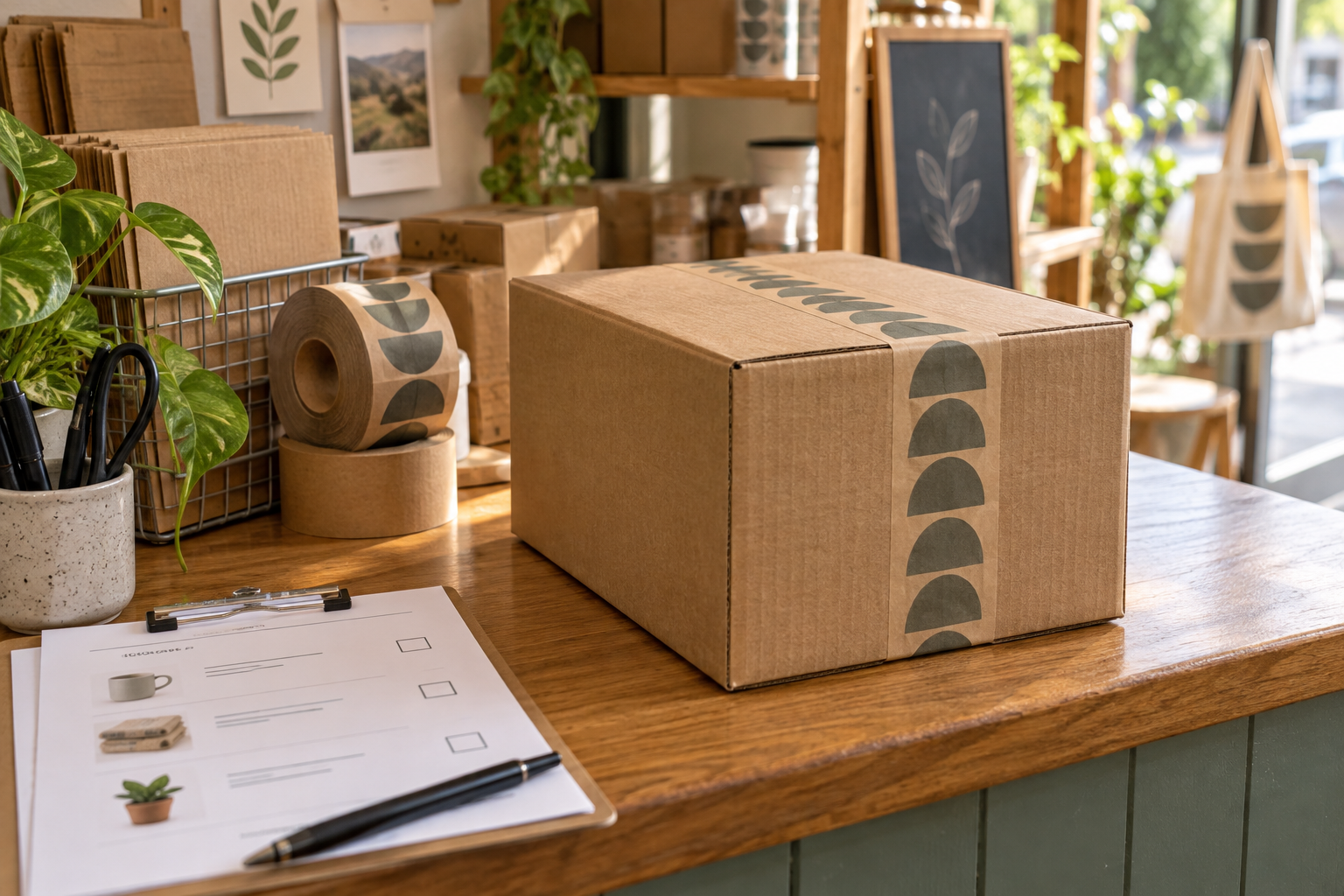
Choose an item and the box you intend to use. Add the internal protection, close the flaps and identify the sealing method. Record where the work is awkward.
Can the carton sit flat on the counter? Is there room for tape preparation? Can the shipping label be applied without covering the brand or interfering with the closure? Where does the finished parcel wait for collection?
These observations tell you what your packing space needs.
Decide who owns the parcel
A shop assistant may begin packing while another person serves customers. Without a visible handoff, a box can look finished even though the label or order check is missing.
Use a simple order card with three states: item checked, packed, ready for dispatch. Attach it to the work area or the business’s existing order process. The tape color or logo alone should not be the signal that an order is ready.
Keep the customer’s information within the store’s normal handling process; there is no need to print customer details on branded tape.
Introduce one tape configuration first
BrandTapeCo’s online order starts at 5 rolls per selected configuration. Standard roll length is 50 m, and online widths are 48 mm and 60 mm.
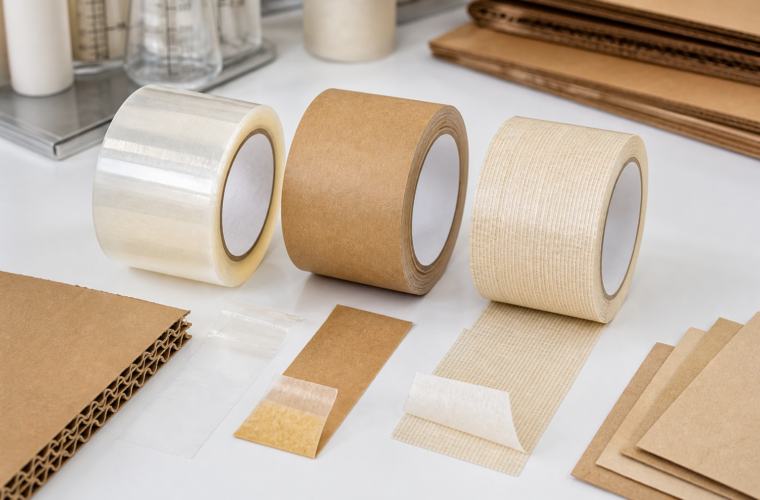
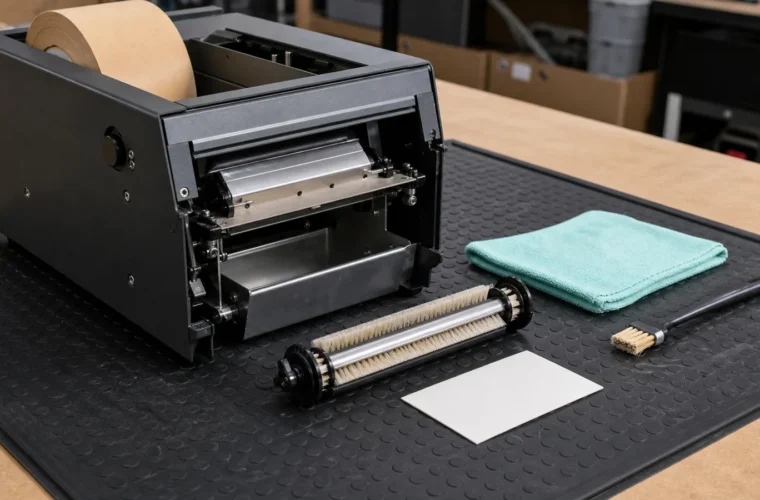
Evaluate the relevant configuration on the cartons the shop actually uses. Ask about application equipment and any unconfirmed roll dimensions. If the current counter cannot accommodate the proposed application method, resolve that before approving artwork.
A simple shop logo may be sufficient for the first design. Product-specific messages can stay on inserts while you learn which order types are common.
Write the packing instruction beside the station
The instruction can be short:
- Select the carton shown for this order type.
- Check the item and internal protection.
- Apply the approved closure using the agreed method.
- Add the correct shipping label.
- Complete the final order check.
- Move the parcel to the dispatch area.
Use a photograph of your own approved setup where it helps. Do not turn a photograph into a claim that every product or route has been tested.
Review after the first group of orders
Record which boxes were used, how much tape was consumed and which step interrupted shop service. That is enough to make the next purchasing decision more informed.
You may discover that the packaging works but the counter is in the wrong place, or that one carton creates most of the difficulty. Correct the specific problem before buying a wider range of branded supplies.
The purpose of the first tape order is to support a repeatable shipping routine. Once the routine is stable, the shop can add more artwork or configurations where the actual order mix justifies them.
For the next step in this decision, see Gummed Tape Packing Station Setup: A Practical Planning Guide.
Frequently Asked Questions
Do I need different tape for every product?
Start with the carton and packing requirements. A shared logo can cover several products if the evaluated configuration suits their outer boxes.
Can the tape show that an order is ready to ship?
Use an explicit order check. A sealed carton does not prove that contents and shipping details were verified.
What should I record before reordering?
The approved configuration, artwork, carton mix, usage and any recurring packing problems.